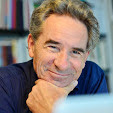
Remember the debates about (North) American and European mentalities when G.W. Bush was in office (unelected - I'm still convinced or is this just my wishful thinking?) and many commentators seemed to believe that the U.S. and Europe drifted apart because of Cheney and Rumsfeld etc.? I happened to believe then and I happen to believe now that North American and European mainstream attitudes are signifîcantly different whether Obama or Cheney is in power. A recent article by Mary Dejevsky in The Independent highlights an interesting aspect of these differences. Here's an excerpt:
"The point is that, when on "normal", the needle of the US barometer is not only quite a way to the political right of where it would be in Europe, but showing a very different atmospheric level, too. For there is a mean and merciless streak in mainstream US attitudes, which tolerates much more in the way of inequality, deprivation and suffering than is acceptable here, while incorporating a large and often sanctimonious quotient of blame.
This transatlantic difference goes far beyond the healthcare debate. Consider the give-no-quarter statements out of the US on the release of the Lockerbie bomber – or the continued application of the death penalty, or the fact that excessive violence is far more common a cause for censorship of US films in Europe than sex. Or even, in documents emerging from the CIA, a different tolerance threshold where torture and terrorism are concerned.
Some put the divergence down to the ideological rigidity that led Puritans and others to flee to America in the first place; others to the ruthless struggle for survival that marked the early settlement years and the conquest of the West. Still others see it as the price the US pays for its material success. What it means, though, is that if and when Obama gets some form of health reform through, it will reflect America's fears quite as much as its promise. And it is unlikely to be a national service that looks anything like ours."
For the full text, go here
Tuesday, 22 September 2009

Sunday, 20 September 2009
Brazil, the smallest big country in the world
Brazil is the smallest big country in the world. Although it is the fifth largest nation on the planet, four times the size of Mexico and more than twice that of India, the Brazil where most Brazilians live, work and play forms only a small fraction of the country's total landmass of 8,509,711 sq. km (3,285,618 sq. miles). One in four people crowd into five metropolitan areas in the southern part of the country.
Together, the southern and southeastern states contain more than 60 percent of Brazil's population yet account for only 16 percent of the country's geographic area. In effect, 98 million Brazilians live in an area slightly smaller than Alaska, while another 66 million populate an area the size of the continental United States minus Texas. What Brazil has is space - enormous regions of vast, empty space.
Insight Guide Brazil, 2000
Friday, 18 September 2009
Pictures that I like (8)
 In Paese @ Antonia Zennaro
When I recently came across the homepage of Antonia Zennaro, a young photographer living in Hamburg, and studying at the Danish Journalism School in Aarhus - for her impressively international CV, go to http://www.antoniazennaro.com/ - I was especially fascinated by her Italian pics that seemed to originate from another era. The one shown here was taken in 2006, in San Giovanni di Fiore, a mountain village in Calabria. It was Sunday, and Antonia, who had to do an assignment for the photography course in Rome that she was then attending, was walking through the village streets looking for possible pictures. Her big format camera (a Sinar) caused a lot of interest and so, in Antonia's own words, "there were no troubles to take a picture of a family with neighbours. The mother had to hurry because the food was in the oven, but in the end she gave me the time to get this moment."
I not only like this picture, I also like Antonia's description of how it came about for it is indeed the people portrayed who, by giving their time, made the photo of this moment possible.
Wednesday, 16 September 2009
After Photography
In his inspiring new book After Photography (W.W. Norton & Company, New York 2009), Fred Ritchin quotes filmmaker Wim Wenders:
"The digitized picture has broken the relationship between picture and reality once and for all. We are entering an era when no one will be able to say whether a picture is true or false. They are all becoming beautiful and extraordinary, and with each passing day they belong increasingly to the world of advertising. Their beauty, like their truth, is slipping away from us. Soon, they will really end up making us blind."
This, however, is not how Ritchin himself sees it. He writes: "In the digital environment ... the photograph is no longer a tangible object, a rectangle resembling a painting, but an ephemeral image made of tiles." He illustrates his point very convincingly, I find: "For example, a new photographic template could be devised in which information is hidden in all the four corners of the image so that those interested could make it visible by placing the cursor over each corner to create a roll-over. The bottom right corner might contain issues of authorship and copyright; the bottom left could contain the caption and amplifying comments by the photographer; the upper left could contain responses to the image by its subjects; and the upper right could give information as to how the reader can become involved, help, learn more, by providing Web addresses and other guidance."
Great! Wonderful! I'd be all for it! The reason I warm to it so much is that in this way we would get a much more realistic picture of reality than we presently (can) have; it would be easier to see (also in the sense of "to understand") that what we term reality is essentially negotiated. Such an approach has the potential to liberate us from contexts imposed by photographers, photo editors and other context providers. But, do we want this? Do we really want, and can we cope with, even more uncertainty than the one that we experience already?
The full review you will find here
Monday, 14 September 2009
Mehr Meer
Es gibt Bücher, viele sind es nicht, da fühlt man sich sogleich gepackt und hineingezogen, und zu diesen gehört ganz unbedingt Ilma Rakusas "Mehr Meer". Ja, Bücherlesen ist was Persönliches und, klar doch, ich spreche von mir, doch so eine Ausnahme bin ich dann auch wieder nicht, dass andere diese Lektüre nicht genauso wunderbar finden könnten. Was ist es also, dass diese "Erinnerungspassagen", so der Untertitel, so besonders macht? Einmal die aussergewöhnliche Wahrnehmungsfähigkeit der Autorin, dann aber auch die Sprache, der Rhythmus, der Ton. Das Buch beginnt mit Erinnerungen an den Vater und das liest sich, und klingt, so:
"Als er starb, hinterliess er nichts Persönliches. Keine Briefe, keine handschriftlichen Notizen, nichts. In seinem Schreibtisch lag der Autoschlüssel mit dem silbernen Mariatheresienthaler, in den Schubladen Bankauszüge, Versicherungsausweise, säuberlich geordnet. keine unbezahlten Rechnungen. Alles transparent, verständlich, korrekt. Zahlen, kleine, grosse. Ein abstrakter Kosmos. Die Kartonmappen rosa, zitronengelb, mausgrau, ohne Flecken und Knicke, geruchlos. Er hatte für uns vorgesorgt, auf lange Jahre.
Das war seine Selbstlosigkeit.
Ich roch an seinen Kleidern. Sie hingen still im Schrank. Kleiderkolonnen wie Zahlenkolonnen. Der leicht ausgefranste Pulloverärmel war tröstlich, und unten die ausgetretenen Lederpantoffeln. Fast bekam ich Mitleid mit ihnen. Argloser konnte man nicht sein. Und anhänglicher. Vor dem stummen Krawattenrudel machte ich kehrt.
Er wollte. Wollte einiges aus seinem Leben aufschreiben, weil ich ihn darum gebeten hatte. Für die Nachwelt, sagte ich, für uns, sagte ich. Er trug sich so lange mit dem Gedanken, bis es zu spät war: Er fiel vom Stuhl und blieb liegen. Ohne eine einzige Zeile zu Papier gebracht zu haben."
Das soll mir nicht passieren, stellt man sich vor, dass sich die Tochter gesagt hat und so schreibt sie auf, was sie von ihrer Kindheit und Jugend in Mitteleuropa, in der Zeit nach dem Zweiten Weltkrieg, erinnert. Geboren ist Ilma Rakusa 1946 in der heutigen Slowakei, von dort zog die Familie, der Vater ist Slowake, die Mutter Ungarin, nach Budapest, nach Barcola bei Triest, schliesslich nach Zürich, weil der Vater in ein demokratisches Land wollte, wo die Schriftstellerin, Übersetzerin und Literaturkritikern seit 1951 lebt.
Sie fährt nach Wilna, wo ihre Vorfahren mütterlicherseits herstammen, nach Rimavska Sobota, ihren Geburtsort ("An einem klirrend kalten Novembertag des Jahres 2004 begrüsse ich die Stadt wie eine Unbekannte. Aber die Apotheke sieht wie auf dem Foto aus ... Ich bin, wo ich einst war, ohne mich zu erinnern, angekommen."), nach Budapest, nach Ljubljana, nach Triest ("Ich wollte ans Meer, immer ans Meer. Fotos, zeigen mich im knöchellangen, ungarischen Lammfellmantel, mit Wollmütze, auf der Mole von Barcola. Es muss kalt und windig gewesen sein, ich runzle die Stirn. Aber vom Meer hielt mich kein Wetter ab, höchstens die Bora."). Das Tolle an Rakusas Schilderungen ist, dass sie einen, auch wenn man ganz anders und an ganz anderen Orten aufgewachsen ist, an die eigenen Kindheitsempfindungen erinnern. Und dass sie einem das Gefühl geben, selber zu dieser Zeit an diesen Orten mit dabei gewesen zu sein:
"Im Januar 1951 brachen wir nach Zürich auf. Vater, Mutter, mein drei Monate alter Bruder, ich und unsere ganze Habe. Wir fuhren in einem Oldsmobile mit Sommerreifen. Ohne Ahnung, was uns im Norden erwarten würde. Die erste Überraschung war der Schnee, Schneewände auf dem Gotthard-Pass. In einer Kurve schlitterten wir in eine solche Wand. Sie erwies sich als gnädig: brachte uns zum Stehen, drückte dem Wagen aber nicht einmal die Nase ein ... In Zürich bezogen wir eine möblierte Mietwohnung, die zuletzt der chinesische Schriftsteller Lin Yutang bewohnt hatte. Im schwarzen Bücherschrank standen einige seiner englischen Werke, als Willkommensgruss ... (Am Rande: dass Lin Yutang, dessen sehr lesenswertes "The Importance of Living" ich vor Jahren an einem Stand mit gebrauchten Büchern in Havanna erstanden hatte, einmal in Zürich gewohnt hatte, erstaunte mich nicht wenig) ... Der Schnee kam über Nacht. Eine weisse Fracht. Er verwandelte alles: das Licht, die Geräusche, die Umgebung. Etwas Gleissendes war da, und viel Stille. Es schneite weiter. Staunend sah ich zu, wie die Flocken vom Himmel fielen und sich lautlos auf das Balkongeländer, die Büsche und Bäume legten. Schaute ich zu lange in den Flockenwirbel, wurde mir schwindlig, als wäre ich selber im Fallen begriffen."
Sehr schön auch dies:
"Ist damals damals? Ist heute heute? Die Zeit ist keine Fadenspule. Am Schnürchen aufgereiht ist nichts. Meine Erinnerung gleicht einer treibenden Eisscholle, die aufragt, untertaucht, bis sie allmählich, sehr allmählich, weniger wird.
Gegen die Auflösung ist nichts einzuwenden.
Noch aber buckelt sich dies und das. Hat Kontur. Hat Gewicht."
Der Leser (ja, auch die Leserin) ist froh drum. Und erfährt davon, was die Musik bezw. die Klänge der Autorin bedeuten ("Noch heute nähere ich mich fremden Sprachen mit dem Ohr an.") und liest von ihrer kindlichen Vorfreude auf Reisen und von der Realität des Unterwegseins ("Das Auto ist die beste Wiege. Vom Hintersitz aus beobachten, wie die Landschaft vorbeigleitet, - fliegt, beim brummenden Motorgeräusch in träge Wachheit verfallen. Was ich sehe, geht mich nichts an, tut nicht weh, da - und schon wieder weg, Bis die Konturen verschwimmen, die Augenlider schwer und schwerer werden. Die Wirklichkeit wischt vorbei und zieht, genauso unfassbar, in mein Schlafinneres.") und und und ... doch hier, nach etwa einem Drittel des Buches, soll Schluss sein mit dem Nacherzählen und Zitieren, denn wer bis jetzt nicht neugierig geworden ist auf dieses Geschenk von einem Buch, dem (Frauen sind mit-gemeint) ist schlicht nicht zu helfen.
PS: Eine Geschichte soll doch noch nachgeschoben werden, ganz einfach, weil sie zu schön ist, um hier nicht erwähnt zu werden. Als die Autorin, während sie an ihrer Dissertation arbeitete, ein Jahr in Leningrad verbrachte, besuchte sie eines Tages auch Nadeschda Mandelstam und schildert dies so: "Empfing mich liegend auf einem orientalisch dekorierten Sofa, kaute Sonnenblumenkerne und fragte rundheraus: Glauben Sie an Gott? Erst als ich bejahte, war sie bereit, sich auf ein Gespräch mit mir einzulassen."
Ilma Rakusa
Mehr Meer
Erinnerungspassagen
Literaturverlag Droschl, Graz 2009
Saturday, 12 September 2009
No decent targets
Later in the day, Secretary Rumsfeld complained that there were no decent targets for bombing in Afghanistan and that we should consider bombing Iraq which, he said, had better targets. At first I thought Rumsfeld was joking. But he was serious and the President did not reject out of hand the idea of attacking Iraq. Instead, he noted that what we needed to do with Iraq was to change the government, not just hit it with more cruise missiles, as Rumsfeld had implied.
Richard A. Clarke: Against All Enemies
Richard A. Clarke: Against All Enemies
Thursday, 10 September 2009
Pictures that I like (7)
Blazenka Kostolna is an artist, we know each other for almost twenty years. I am one of her artistic projects, which means that she regularly takes pictures of me, and always in Zurich, Switzerland, where she happens to live. What you can see below is how I, or Blazenka's view of me, or my way of looking into the camera, have changed during the last three and a half years. In August 2009, I've started to look back ...
 August 2009
 February 2009
 October 2007
 February 2006
All photos @ by Blazenka Kostolna
Subscribe to:
Posts (Atom)