Wednesday, 27 May 2015

In Phuket Town

On my flight to Singapore, the kids of a French-speaking couple are pretty loud, especially the cute girl of about two makes herself much heard at regular intervals, the parents do not intervene. One of the flight attendants smilingly distributes ear-plugs to the passengers in the next row.

While boarding the plane to Phuket, a short, and rather stocky pilot, who looks about 23, is running alongside the embarking passengers towards the plane entrance ... he is my first sweating, out-of-breath pilot; I've always imagined them tall, somewhat superior, and fully in control.

Phuket Town seems to be a paradise for dentists. Dent Center reads a sign, Dental Home Clinic another, and then there's also the Dental Master.
The tourists that I meet are from South Africa, Zimbabwe, Poland, and the North of Thailand. The Russians of recent years seem to have been gone. The young man who shows me around one of the hotels that I'm checking out says that there are lots of Chinese guests. Loud? I ask for I had seen them storming the buffet at another hotel not so long ago. Yes, he smiles, but they are on the first and the second floor, you would be on the third.

Like everywhere else in Thailand, taxi services are offered wherever you go. I remember a Thai teacher who, when asked how one should respond to taxi drivers who shouted at every corner: taxi, taxi, where you go?, said, well, you simply ignore them. If that doesn't help, you could still say pai rong pak because no taxi driver wishes to go there. And, what does that mean? I'm going to the police station, the teacher smiled.
Where do you get off? the Thai woman next to me on the bus wants to know from the woman sitting opposite. I'm not Thai, I'm from the Philippines, she says in Thai (which is about as good as mine - virtually non-existent, that is) and I feel reminded of this: Two young women, one Irish, very white, red hair, fluent in Thai (she grew up in Bangkok), the other a Filipina from Manila, indistinguishable from a Thai, fluent in English but speaks no Thai at all, get into a taxi. The taxi driver addresses the Filipina (he thinks she is Thai) in Thai and gets angry when she responds in English. The Irish girl tries to explain (in Thai) but is cut off by the taxi driver who does not want to be lectured by a Farang. And, above all, he surely does not accept such an arrogant fellow Thai who refuses to speak their common language with him ...

Wednesday, 20 May 2015

Sich von Landquart her nähernd


Diese Bilder wurden mit einem Nokia-Handy im März 2015 in Landquart aufgenommen.

Wednesday, 13 May 2015

"Painted" by Water

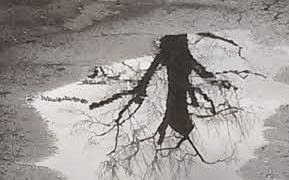
Some years ago, in the Southern California desert, my friend Emelle, a photographer, irritated me rather often by stopping at the most unremarkable places - like for instance a pool of water on the street - in order to take photographs of what she thought were interesting images "painted" by water. I  didn't really pay attention. And then, in April 2015, while on a walk along the railway track in Sargans, the reflection of a tree in a pool of water caught my attention (see below) and Emelle's "water project" did come to mind. And so I went to her website and liked very much what I saw there: http://emelleart.com/hydromancy/

Taken with a Samsung Mobile

Wednesday, 6 May 2015

Ein Frühling in Jerusalem

Das ist gekonnt, dieser Einstieg, "zehn Fahrgäste in einem Grossraumtaxi, blass und ernst, in frommes Schwarz gekleidet fast alle, chauffiert von einem mürrischen Fahrer, der sie am Flughafen aufgelesen hatte". Surreal, obwohl real. Literatur, keine Wirklichkeit. Mir ist die Wirklichkeit lieber. Doch mich fasziniert und irritiert wie Wolfgang Büscher seine Zeit in Jerusalem schildert. 

Ein Armenier, von einem Freund empfohlen, soll ihm die Stadt näher bringen. Zwei Monate will er zunächst einmal bleiben. Der Armenier hat dafür nicht viel übrig. "Ich bin hier geboren und lebe seit sechzig Jahren hier, und manches verstehe ich immer noch nicht. Zwei Monate."

Ich selber wäre nach einer solchen Begrüssung davongelaufen - ich halte überhaupt nichts von Leuten, die glauben, die Länge eines Aufenthalts sage etwas über das Verstehen eines Ortes aus. Büscher ist anders, Büscher trifft sich mit dem Mann regelmässig in Cafés, unter anderem auch im k.u. k. Hospiz: "Der warme Apfelstrudel kam. Chopin perlte, Dvorák wogte, und Kaiser Franz und Kaiserin Sissi schauten aus ihren vergoldeten Rahmen auf das Wiener Kaffeehaus an der Via Dolorosa herab, in dem wir sassen." Für meinen Geschmack klingt das etwas arg schöngeistig.

Ein Frühling in Jerusalem ist genau beobachtet und sprachlich sehr differenziert, gleitet jedoch  gelegentlich ab in missratene Poesie ("Eisig stand der Morgenstern, der Grosse Juwelier hatte ihn auf schwarzen Samt gelegt über Nacht."), wartet andererseits dann wieder mit ganz wunderbaren Schilderungen auf wie etwa dieser hier von einem der Cafés in der Mamilla Mall:

"Einmal fragte ich einen jungen Kellner, ob es in seinem Café schon einmal Probleme zwischen jüdischen und arabischen Gästen gegeben habe. Ein knappes 'Nein' war die Antwort. Die Frage irritierte ihn, ich sah es ihm an. Er fand sie fehl am Platz. Sie war es auch - und eben das war das Wunder von Mamilla."

Viel Historisches wird da ausgebreitet, kein Wunder bei dieser Stadt. Mehr gepackt fühlte ich mich vom Porträt eines jungen Benediktiners, aus einer liberalen Künstlerfamilie aus Süddeutschland stammend. "Das Mönchsein war ihm nicht in die Wiege gelegt worden, weder aus Tradition noch von der Familie. Er war nicht hineingeglitten oder gar geschoben worden, er hatte sich dafür entschieden."

Und dieser junge Mönch, der oft nach Tel Aviv fährt, wo er eine Gemeinde zu betreuen hat, liefert eine höchst anschauliche Charakterisierung der beiden Städte: "Israel ist ein Start-up-Land, Jerusalem ein Armenhaus. Wer jung ist und etwas verdienen will, der geht weg. Viele Israelis hassen Jerusalem, manche waren noch nie dort. Die Luft ist eine andere hier. Tel Aviv ist das israelische San Francisco. Party. Gay. Geld verdienen, Geld ausgeben. Hier oben ist es strenger, schwärzer. Früher gab es ein Ausgehviertel in Jerusalem, davon ist wenig übrig. Ultraorthodoxe und Araber prägen heute die Stadt, immer stärker, denn sie sind es, die viele Kinder kriegen."

Wolfgang Büscher wird geraten, gewisse einsame Gassen zu meiden (Überfälle, Messerstechereien), kommt zum Schluss, dass es offenbar zum Wesen heiliger Orte gehört, "dass um sie ein ziemlich unheiliger Ton herrscht, dass es ruppig zugeht und sogar grob" und beschliesst, eine Nacht eingeschlossen in der Grabeskirche zu verbringen ("Mitternacht, ich sass in der Grabeskirche, näher war dem Geheimnis nicht zu kommen auf dieser Erde.").

Er habe das Glück gehabt, weitergereicht zu werden, sagte Büscher in einem Interview. Er trifft auf Nora, Ada und Dr. John, den Autor von "I am Jerusalem", und lässt sich von ihnen Geschichten erzählen. Er ist ein ausgezeichneter Zuhörer, weiss sich zurückzunehmen. "Dr. John wurde grundsätzlich. 'Die Israelis haben ein Gutes: Wenn sie jemanden sehen, der mehr weiss als sie, dann kommen sie und hören ihn an. Die Araber tun das nicht. Israelische Historiker kommen zu mir und befragen mich, arabische nie.' Er wurde noch grundsätzlicher. 'Ich bin nicht allzu gläubig. Aber ich mag es, jeden Morgen zu beten, meist die alten Psalmen.'"

Wolfgang Büscher
Ein Frühling in Jerusalem
Rowohlt Berlin 2014

Wednesday, 29 April 2015

Expanding Universe

Hubble is a telescope that orbits Earth. "Over the past 25 years, Hubble has been both a scientific marvel and a gallery of wonder, shedding light on dim places, and sending back gorgeous pictures that are expanding human knowledge and reminding us of Earth's tiny and precious place in the cosmos", writes Charles F. Bolden, Jr. And Owen Edwards states (in his essay "The Color of Chaos"): "The Hubble has seen deeper into space and farther back in time than any of humanity's questing eyes, and its unexpected gift is that in addition to great science the telescope is making great art – art like nothing ever seen before."
Spiral Galaxy
Distance from Earth 220,000,000 light years

So what exactly has Hubble taught us? It has empowered astronomers to make a far more precise estimate of the age of the universe. It has shown that the universe is expanding. And, it has revealed thousands of galaxies.

And what, by the way, is a galaxy? This is what Wikipedia says: "A galaxy is a gravitationally bound system consisting of stars, stellar remnants, interstellar gas and dust, and dark matter." The galaxy in which the microdot called Earth travels is called Milky Way and is 100,000 light-years across. Needless to say, this is way beyond my imagination. And the fact, as mentioned above, that Hubble has revealed thousands of galaxies makes me shiver. Especially, when thinking of the famous quote by the science fiction writer Arthur C. Clarke: "Two possibilities exist: either we are alone in the Universe or we are not. Both are equally terrifying." Well, given all these galaxies, it looks more likely that we are not alone.
Star-forming Nebula
Distance from Earth 6,500 light years

What we see in the pages of this book is not what Hubble has sent to Earth. "The telescope 'sees' the visual universe, which has color (hot stars are blue, for instance, and cooling stars are red); the pictures astronomers receive are in black and white. Then, using a variety of filters and other data collected by Hubble, including infrared light, microwaves, X rays, and gamma rays, color images are produced. None of the colors are entirely arbitrary ...".

Whether or not these fabulous images (that are astronomical facts) should be considered art (a question that Owen Edwards ponders in his essay) isn't really what's on my mind when spending time with these pics. Instead, I feel overwhelmed by what I've been told. Let me repeat it: thousands of galaxies and in one of these travels the microdot called Earth! My daily problems as an inhabitant of this microdot seem all of a sudden slightly less important. Well, sort of.
Star-forming Nebula
Distance from Earth 6,500 light years

Expanding Universe also contains a concluding statement by John Mace Grunsfeld, an astronaut on three of the five missions to Hubble, an interview with Zoltan Levay, who is in charge of transforming the data gathered from Hubble into photos and graphics, a photo index, a distance ladder, a glossary, information on the thirteen science instruments that Hubble carried along, and the biographies of the contributers to this tome.

Expanding Universe has very definitely altered my world-view. And, it will alter yours too!

Expanding Universe
Photographs from the Hubble Space Telescope
Taschen Cologne, 2015

Wednesday, 22 April 2015

Vom Ende der Ewigkeit

Meine Faszination für die Fotografie hat sich im Laufe der Zeit gewandelt: waren es vor 15 Jahren vor allem Aufnahmen von Menschen (und speziell Porträts), die mich anzogen, so sind es heutzutage vermehrt Naturfotos, die mich in ihren Bann ziehen. Die Konstante dabei ist mein Interesse für den Entstehungsprozess der Bilder. Es ist selten, dass mir ein Bildband Informationen über die Empfindungen der Fotografierenden liefert. Zu diesen Ausnahmen gehört Camille Seamans Vom Ende der Ewigkeit. Die Texte zu den untenstehenden Bildern stammen von der Fotografin, die, obwohl sie während ihrer Teenagerjahre viel fotografiert hat, nie in Betracht gezogen hatte, als Fotografin Karriere zu machen. Damals war noch nicht offensichtlich, dass sie damals "ein Samenkorn gesät hatte, das nach und nach Wurzeln bekam und eines Tages blühen wurde."
Grosser Pyramideneisberg, Detail
Ostgrönland, August 2006
Eisberge werden je nach Form und Grösse in unterschiedliche Gruppen eingeteilt. Dieser Pyramideneisberg war ziemlich spektakulär.

1999 ist Camille Seaman zum ersten Mal in die Arktis gereist. Zwischen 2003 und 2011 dann jedes Jahr, an Bord von Forschungs- und Handelsschiffen, als Expeditionsfotografin. Die Bilder und Texte in diesem Band legen davon Zeugnis ab.

Die Bilder: wunderbar, eindrücklich, schön und unwirklich. Die Farben von Türkis bis Rauchschwarz! Das Bewusstsein für die Qualität des Lichts hatte ihr Steve McCurry beigebracht. 

Dass es solche Eislandschaften überhaupt gibt! Beim Lesen der Texte erfährt man dann, dass sie am Schmelzen und damit am Verschwinden sind.

Über den Klimawandel hat sie lange Zeit nicht wirklich nachgedacht. "All die Jahre dachte ich, ich fotografiere einfach nur einen unfassbar schönen Teil unseres Planeten - bis mir klar wurde, dass ich nicht festhielt, was wir haben, sondern was wir gerade verlieren."
Eselspinguine in Balzpose
Cuverville Island, Antarktische Halbinsel, Dezember 2007
Diese beiden Eselspinguine vollführen einen Balztanz, bei dem sie sich perfekt synchron bewegen müssen, wenn sie ein Paar werden wollen. Pinguinpaare bleiben manchmal über viele Jahre zusammen und stärken ihre Bindung, indem sie diesen Tanz wiederholen.

Camille Seaman kam als ältestes Kind einer afroamerikanisch-italienischen Mutter und eines Shinnecock-Vaters zur Welt. "Ich war nicht schwarz genug, um Schwarze zu sein, nicht indianisch genug, um Indianerin zu sein, und nicht italienisch genug, um Italienerin zu sein. Ich war etwas anderes. Ich stand ausserhalb als Beobachterin und bemerkte, dass das unglaubliche Vorteile hat." Unter anderem der, dass sie nicht ausgeschlossen werden und deshalb Brücken zwischen unterschiedlichen ethnischen Gruppen bauen konnte.

Nicht dazugehören zu müssen, erlaubt sich auf eine Wirklichkeit einzulassen, in der es keine Grenzen der Sprache, der Ideologie und der Kultur gibt. Und dabei zu erfahren, dass alles mit allem verbunden ist. "Wir sind wahrhaftig ein lebendes Netz, jeder Einzelne ist mit den anderen verbunden. Mir wurde klar, wie absurd wir Menschen gegenwärtig handeln und denken. Wir verhalten uns, als wären wir irgendwie losgelöst von allen anderen Lebensformen oder würden über diesen stehen."
Eisberg, Detail mit Dreizehenmöwen
Ostgrönland, August 2006
Allein die Tatsache, dass unser Schiff an diesem ungefähr hundert Meter aus dem Wasser ragenden Eisberg vorbeifuhr, reichte aus, um die Vögel von ihren Ruheplätzen aufzuscheuchen. Ich mag die Oberfläche dieses Eisbergs, die an die Haut eines Elefanten erinnert.

Camille Seaman sei ein Impulsgeber, schreibt Elizabeth Sawin im Vorwort. 
"Diese für uns als Impulsgeber wirkenden Menschen gehen an Orte, an die die meisten von uns nicht gehen können, nie gehen werden, und von dort bringen sie uns dann etwas mit, das uns – wenn wir es zulassen – verändern wird. Und plötzlich wird uns etwas bewusst, das wir vorher nicht einmal wahrgenommen haben. Unsere Erde, unser Zuhause ist schön. Und klein. Und ein Ganzes.
Es ist kostbar.
Und es verändert sich.
Wir verändern es."

Camille Seaman
Vom Ende der Ewigkeit
Eine Reise durch bedrohte Polarwelten
Prestel, München-London-New York 2015

Wednesday, 15 April 2015

Minor White

Minor White by Paul Martineau, associate curator in the Department of Photographs at the J. Paul Getty Museum, contains 4 color and 160 b/w illustrations. And a well-written text entitled „My Heart Laid Bare“ that provides varied information about the photographer's life.

Minor White, born 1908 in Minneapolis, decided at the age of 28 to move West and ended up in Portland, Oregon, where he started to get seriously interested in photography. He made regular visits to the library and so became familiar with the works of Berenice Abbott, Ansel Adams, Alfred Stieglitz, and Edward Weston. He also joined the Oregon Camera Club
„Dreams and photographs have something in common; those photographs that yield to contemplation at least have a quality about them that tempt one to set associations going.“ (Minor White).
Vicinity of Rochester, 1954,

Many pics in this tome radiate a spirit that puts me in a trance-like state. Take the one of the two barns for instance. It is the sharp edges of the barn to the right that first caught my attention, and then the shadow of the telegraph pole, and then the sky above the two barns – it is almost as if I were able to move along with the clouds. There's something magical about this photograph, and about quite some others in this tome. „Manifestations of the Spirit“ describes indeed very aptly what I often felt.

For more, see my review on http://www.fstopmagazine.com/